

Last Week Tonight in BioPharma | Week of April 21st, 2026
Loss leader strategy, overreacting to early sales numbers, Trump is an ibogaine guy, and tariff math hits Japanese Pharma

We’re back for another edition of Last Week Tonight in BioPharma (LWTB)!
In case you’re new, here is what I am trying to do with this series:
A short recap of the most interesting stories from the past week with strategic insights to get you ready for your Monday meetings.
Up to 3 key events per category:
Press Release Decoder: going beyond the company speak, reading between the lines, thinking about what isn’t being said, to illustrate the strategic implications of a company’s moves that don’t make it into the press release
Connecting the Dots: looking at stories that are either about the macro or from the mainstream news and how they may impact BioPharma
Follow the Money: quick takes on some key deals that were struck and what they mean for those companies, their competitors, or the sector at-large
Free to all subscriber levels! Although if you like my free content and have $8/month to spare (or expense to your company), I think you’ll love the deeper analyses my paid subscribers get. You can upgrade at any time by entering your email in the box below.
📡 PRESS RELEASE DECODER
What the press releases actually mean
FDA Approves Regeneron’s Otarmeni for Genetic Hearing Loss — The First Gene Therapy to Restore Neurosensory Function to Normal Levels, Offered at No Cost
📅 Date: 2026-04-23 | 🏢 Company: Regeneron Pharmaceuticals (REGN) | 💊 Drug/Asset: Otarmeni (lunsotogene parvec-cwha); AAV-based gene therapy; OTOF gene replacement; severe-to-profound sensorineural hearing loss | 🏷 Event Type: FDA Accelerated Approval (CNPV Program)
The FDA granted accelerated approval on April 23 for OTARMENI (lunsotogene parvec-cwha), making it the first gene therapy approved for OTOF-related hearing loss and the second new molecular entity approved under the FDA’s Commissioner’s National Priority Voucher (CNPV) program. The therapy is indicated for pediatric and adult patients with severe-to-profound sensorineural hearing loss caused by biallelic variants in the OTOF gene, preserved outer hair cell function, and no prior cochlear implant. Regeneron announced it will provide OTARMENI at no cost to clinically eligible U.S. patients.
Approval was based on the pivotal CHORD trial, which enrolled 20 participants aged 10 months to 16 years who received a single intracochlear infusion — a procedure similar to cochlear implantation. The trial’s primary endpoint was met: 80% of participants (16 of 20) achieved hearing improvement at or better than ≤70 dB HL pure tone audiometry at 24 weeks. Seventy percent (14/20) achieved auditory brainstem response ≤90 dB at 24 weeks, meeting the key secondary endpoint. Among the 12 participants followed to 48 weeks, 42% (5/12) achieved normal hearing including whispers (≤25 dB HL) — a remarkable threshold for a disease that was previously managed only with assistive devices.
OTOF-related hearing loss affects approximately 50 newborns per year in the United States, making it ultra-rare even by orphan disease standards. The condition involves a non-functioning otoferlin protein critical for communication between inner ear sensory cells and the auditory nerve. OTARMENI uses a modified, non-pathogenic AAV vector to deliver a working copy of the OTOF gene into cochlear hair cells, with expression restricted via a proprietary Myo15 promoter. Continued accelerated approval is contingent on results from the ongoing confirmatory portion of the CHORD trial. Common adverse reactions (≥5%) included otitis media, vomiting, nausea, dizziness, and procedural pain. The approval coincided with Regeneron’s announcement of a Most-Favored-Nation (MFN) drug pricing deal with the Trump administration.
BPS’ Take: Let me separate the science from the politics here, because both are actually significant in their own right. On the science: this is a genuinely impressive efficacy for a gene therapy in a neurosensory indication — 42% of patients achieving normal hearing including whispers at 48 weeks is the kind of outcome that justifies the “transformative” language usually deployed too liberally in biopharma press releases. The CHORD trial is small (n=20), it’s accelerated approval with confirmatory data pending, and the 12-month durability data is still immature. But the results are real.
On the politics side of the equation, this clearly feels like a carefully choreographed quid pro quo with the Trump administration. Trump is focused heavily on the optics (not the substance) of lowering drug prices. By providing OTAREMNI for free and agreeing to cut prices of its PCSK9 inhibitor (PRALUENT), Regeneron get’s to avoid the 100% tariff that was looming over its head for three years. It’s likely a small concession for REGN to make. OTARMENI affects roughly 50 infants per year (small market). The price cut via MFN is likely discounting PCSK9 down to what they were already offering behind the scenes to payers. So again - it’s a win on the optics for Trump and not that big a concession for Regeneron.
For such a small indication, Regeneron may feel they have more to gain with the positive PR and “being a force for good” than trying to do the work of selling this drug (negotiating with payers, building a sales team, marketing, etc. etc.). Perhaps this engenders good faith with regulators down the road for future gene therapies. Using a loss-leader to boost your reputation with key customers/stakeholders is uncommon in major markets, but it is a strategy used by consumer tech companies all the time. Amazon has done this to the nth degree, selling other product lines to consumers at cost or at a loss, simply to drive up Prime membership growth.
Importantly, while the drug cost itself will be free, the cost of administration, surgical delivery, follow-ups, and other expenses aren’t being covered by Regeneron. I am not saying they should be either, just that for the 50 people a year with this horrible disease, there is still going to be significant costs associated with getting this treatment. It’s not exactly “free”.
The less salient impact of Regeneron’s decision falls on their small biotech competitors. Regeneron has placed a significant barrier for smaller biotechs that could be competitors (i.e. Sensorion, Akouos, and Sound Biologics, to name a few). Giving something away for free is a luxury only mega companies can afford. You see this in a more altruistic sense for global health. For instance, Gilead selling its long-acting HIV prevention drug, lencapavir, at-cost in low-and-middle-income countries. Smaller players trying to develop a drug in OTOF-related hearing loss now need to rethink their corporate strategy. If the benchmark is “free 99”, it makes developing a new treatment in this space less palatable, thus hindering innovation.
Revolution Medicines’ Daraxonrasib Shows 58% ORR in First-Line Pancreatic Cancer at AACR — Phase 3 RASolute 302 Results Headed to ASCO Plenary
📅 Date: 2026-04-21 | 🏢 Company: Revolution Medicines (RVMD) | 💊 Drug/Asset: Daraxonrasib (RMC-6236); oral RAS(ON) multi-selective inhibitor; Phase 1/2 first-line metastatic PDAC; Phase 3 RASolute 302 (met primary + key secondary endpoints) | 🏷 Event Type: Phase 1/2 Clinical Data Readout (AACR Late-Breaking Mini-Symposium) + Phase 3 ASCO Plenary Announcement
Revolution Medicines presented updated Phase 1/2 data from two trials of daraxonrasib at the AACR Annual Meeting in San Diego on April 21, 2026. In the RMC-GI-102 combination cohort, 40 patients with previously untreated RAS-mutant metastatic pancreatic ductal adenocarcinoma (PDAC) received daraxonrasib 200 mg once daily plus gemcitabine and nab-paclitaxel (GnP) in a Day 1/Day 15 schedule. As of a December 1, 2025 data cutoff (≥18 weeks follow-up), the confirmed objective response rate (ORR) was 58% (95% CI: 41–73%), including one complete response. The 6-month Kaplan-Meier PFS estimate was 84% (95% CI: 68–93%); the 6-month OS estimate was 90% (95% CI: 76–96%). Grade ≥3 treatment-related AEs included anemia (33%), decreased neutrophil count (20%), and fatigue (18%), with no Grade 5 TRAEs.
In the monotherapy cohort (RMC-6236-001), patients with previously untreated RAS-mutant metastatic PDAC received daraxonrasib 300 mg daily, achieving a 47% ORR (95% CI: 31–64%) with a disease control rate of 92% (95% CI: 79–98%). Six-month PFS was 71% and 6-month OS was 83%. Separately, Revolution announced the pivotal Phase 3 RASolute 302 trial data — in previously treated metastatic PDAC — will be presented at the ASCO 2026 plenary session; the company had earlier confirmed this trial met all primary and key secondary endpoints, including both PFS and OS. Revolution raised $2.0 billion in concurrent stock and convertible note offerings in mid-April, with shares trading around $142, following the Phase 3 data announcement.
Pancreatic cancer is one of oncology’s hardest problems: approximately 60,000 new U.S. cases annually, ~80% diagnosed at advanced or metastatic stage, 5-year survival for metastatic disease approximately 3%. More than 90% of PDAC tumors harbor RAS mutations, making this cancer the most RAS-addicted of all major tumor types. Daraxonrasib is one of four global Phase 3 trials Revolution is running in PDAC and NSCLC, alongside zoldonrasib (KRAS G12D-selective), which also showed Phase 1 data in KRAS G12D NSCLC at AACR this week.
BPS’ Take: This is continued validity for Revolution Medicine’s platform, pipeline, and lead product. 58% ORR in 1L PDAC is remarkable, especially when you consider chemotherapy-alone typically nets a 25-35% ORR. These data provide important signal to what daraxonrasib’s clinical profile may look like in the P3 RASolute 303 study, which began recruiting earlier this year.
Everyone’s attention now draws to ASCO, where we are going to see the full results from the pivotal P3 RASolute 302 study (2L+ PDAC). Last week, we learned that the study hit on PFS and OS. I imagine when we see the KM curves, you’ll be able to fit an iceberg in between them. Both the AACR data and forthcoming ASCO data continue to justify RVMD asking for such a high price when they were shopping themselves in January, and perhaps portend an even greater rise in the company’s market cap upon launch. If the 2L+ PDAC data look as good as we think they will, that is having a halo effect on daraxonrasib’s 1L PDAC product profile as well.
Lilly Tumbles on Foundayo’s Shaky First Full Week — Oral GLP-1 Price War Gets Its First Scorecard
📅 Date: April 25, 2026 | 🏢 Company: Eli Lilly (LLY), Novo Nordisk (NVO) | 💊 Drug/Asset: Foundayo (orforglipron), oral small-molecule GLP-1 agonist; Oral Wegovy (semaglutide), oral peptide GLP-1 agonist | 🏷 Event Type: Commercial Launch Data / Stock Movement
Eli Lilly shares fell nearly 5% on Friday after IQVIA weekly prescription data showed Foundayo — the first oral small-molecule GLP-1 approved for obesity — generated 3,707 U.S. prescriptions for the week ending April 17, its first full week on the market. That figure jumped from 1,390 prescriptions recorded over the drug’s initial two days of availability following its April 6 launch, but fell short of the bullish trajectory investors had modeled. For comparison, Novo Nordisk’s rival oral Wegovy tablet hit 3,071 prescriptions in its first full week and then surged to 18,410 the following week, per IQVIA data shared by RBC Capital Markets analyst Trung Huynh.
The prescription shortfall prompted a meaningful recalibration of 2026 sales expectations. According to Huynh, some investors had initially projected as much as $5 billion in 2026 Foundayo sales; those estimates are now being pulled back to a $1.3-1.5 billion range — a number achievable if approximately 300,000 prescriptions are written by year-end. Lilly’s stock decline contrasted sharply with Novo Nordisk, which rose 7% on the same day as the market interpreted the data as a relative win for oral Wegovy’s early commercial trajectory. Foundayo is priced at $149/month through LillyDirect, compared to Novo’s oral Wegovy subscription at $249/month.
BPS’ Take: Let’s pump the brakes on both the panic and the celebration here. It’s way too early to write-off FOUNDAYO. One week of IQVIA data is a snapshot of how quickly the prescription fulfillment pipeline filled during the first seven days of a brand-new drug with a brand-new NDC code hitting pharmacy systems for the first time. Week 1 and Week 2 numbers are dominated by logistics, wholesaler stocking, pharmacy adjudication setup, prior authorization workflows, and LillyDirect fulfillment ramp. The real signal won’t emerge until we see Weeks 4-8, when the channel friction normalizes and we’re measuring actual patient starts.
That said, the comparison to oral Wegovy’s first-week trajectory is the number that matters to Wall Street, and Lilly lost that round. Novo hitting 3,071 in its first full week and then 18,410 the next week shows an acceleration curve that FOUNDAYO hasn’t demonstrated yet. It is still early innings in the oral GLP-1 battle. Much more cards left for both of these players to play.
🌐 CONNECTING THE DOTS
When the outside world meets biopharma
Trump’s MFN Drug Pricing Framework Is Now Complete — 17 Pharma Giants Have Signed, a 100% Tariff Looms July 31 for Holdouts, and Daiichi Sankyo Just Blinked
📅 Date: 2026-04-23 / 2026-04-24 | 🏢 Company: POLICY/MACRO + Regeneron (final signatory) + Daiichi Sankyo (tariff casualty) | 💊 Drug/Asset: All patented pharmaceuticals; MFN pricing; Daiichi Sankyo oncology portfolio (Enhertu, Datroway) | 🏷 Event Type: Thematic Bundle — Drug Pricing Policy + Pharma Tariff Shock
The Trump administration’s Most-Favored-Nation (MFN) drug pricing framework reached a symbolic milestone on April 23 when Regeneron signed as the seventeenth major pharmaceutical company to enter the deal. The MFN structure requires participating companies to offer Medicaid the same net prices as the lowest prices charged to other developed nations, in exchange for a three-year exemption from pharmaceutical tariff mandates. Among the terms in the Regeneron-specific deal: PRALUENT (alirocumab) will be offered at $225/month via TrumpRx.gov, and OTAREMNI will be provided free. The roster of signatories includes Pfizer, Johnson & Johnson, AstraZeneca, Novo Nordisk, Eli Lilly, Sanofi, and other major global manufacturers.
Companies that have not signed face a graduated 100% tariff on patented pharmaceutical products, with a July 31, 2026 effective date for large companies and September 29, 2026 for smaller companies. Generic pharmaceuticals, U.S.-origin products, and specialty categories are exempt. The United Kingdom negotiated a separate 0% tariff exemption in early April in exchange for agreeing to 25% higher net prices for new U.S. patented drugs sold in the UK — a structural template for other countries potentially under negotiation. Japanese pharmaceutical companies, including Daiichi Sankyo, are currently subject to a 15% tariff under the prevailing trade structure applicable to Japan/EU, with no MFN deal signed.
The tariff pressure crystallized dramatically on April 24 when Daiichi Sankyo — whose ADC portfolio includes ENHERTU (trastuzumab deruxtecan, co-developed with AstraZeneca) and Datroway — announced a two-week delay to its annual earnings report, pushing the disclosure from April 27 to May 11, 2026. The company cited the need to “review supply plans amid rapidly changing business conditions” and to deliberate on “loss provisions related to CDMO contracts.” Daiichi’s Tokyo-listed shares fell nearly 10% to a four-year low (weakest level since March 2022). The company has U.S. manufacturing operations in Ohio (fill-finish, packaging) and New York, but has not signed an MFN pricing deal, leaving its oncology franchise exposed to tariff uncertainty.
BPS’ Take: The MFN framework is simultaneously less and more than it appears. Less than it appears: most companies signing these deals are doing so on terms that affect a fraction of their revenue — Medicaid represents roughly 20–25% of U.S. drug revenue for most large pharma companies, and “most-favored-nation” pricing in practice often just mirrors deals already made with PBMs. The real financial exposure is narrow. More than it appears: the tariff mechanism is a structural forcing function that is visibly reshaping global pharma supply chain strategy. Daiichi Sankyo delaying earnings to model CDMO contract provisions suggests real revenue and cost uncertainty in their operational planning. The companies that hurt most here are mid-size ex-US BioPharmas without U.S. manufacturing and without the political leverage to negotiate MFN deals. The big players have largely adapted. The secondary effects on CDMO contracts and supply chain restructuring are where I’d be watching most carefully.
🚨 Trump Signs Weekend Executive Order on Psychedelics — FDA Issues Three CNPVs and Clears First U.S. Ibogaine Derivative Trial by Week’s End
📅 Date: 2026-04-18 (EO signed, 🚨 weekend break) / 2026-04-24 (FDA response) | 🏢 Company: POLICY + Multiple (Compass Pathways, atai Life Sciences, MindMed, DemeRx NB) | 💊 Drug/Asset: Psilocybin (treatment-resistant depression, MDD), methylone (PTSD), noribogaine (alcohol use disorder) | 🏷 Event Type: 🚨 Thematic Bundle — Executive Order (Weekend) + FDA Regulatory Action (Week)
President Trump signed an executive order on April 18, 2026 — a Saturday — directing the Department of Health and Human Services to accelerate access to psychedelic drug treatments for serious mental illness. The order instructed the FDA to issue Commissioner’s National Priority Vouchers (CNPVs) to psychedelic drugs with Breakthrough Therapy designation, with a focus on treatment-resistant depression, PTSD, and alcohol use disorder. Veterans’ access was specifically highlighted. By April 24, the FDA had responded with concrete regulatory action: CNPVs were issued to three programs (a company studying psilocybin for treatment-resistant depression, a company studying psilocybin for major depressive disorder, and a company studying methylone for PTSD). The FDA also cleared the first U.S. clinical study of noribogaine hydrochloride — an ibogaine derivative — for DemeRx NB in a Phase 1 trial for alcohol use disorder. Additionally, the FDA announced it will release final clinical trial design guidance for serotonin-2A agonists “imminently.”
Psychedelic biotech stocks including Compass Pathways CMPS 0.00%↑ , atai Life Sciences ATAI 0.00%↑ , and MindMed benefited from the sentiment lift following the EO. The Guardian published a piece on April 24 noting that “Trump psychedelics order largely symbolic, analysts say,” reflecting skepticism about whether regulatory velocity will actually accelerate meaningfully versus generating favorable optics. The CNPV program — originally designed for drugs in underserved indications — has now issued 18 vouchers and approved 4 products.
BPS’ Take: A weekend executive order generated a week of positive stock movement for psychedelic biotechs, followed by a set of FDA actions that are real but limited in their near-term impact. It’s hard not to look at this administration’s record and think that this EO isn’t a clear signal that psychedelics are a priority for the administration, which may make it easier for these drugs to get approved. It’s also troubling that famous people like Joe Rogan can just hit up the president and talk his ear off about psychedelics and all of a sudden improve the prospects of this entire class getting approved. If you’ve read BPS for some time now, you know that I’m quite bullish on the psychedelic space overall, especially with regards to novel next-gen psychedelics based off of traditional recreational compounds. However, I’m bullish on it because the data is so profound. Just because this administration seems more easily influenced and willing to curry favors, we can’t let that sacrifice data quality and rigorous testing of these compounds, as great data is still needed to drive necessary uptake in the market.
🚨 Pfizer’s Chief Strategy and Innovation Officer Andrew Baum Exits — The Analyst-Turned-Strategist Departs After Two Years Without a Clear Successor
📅 Date: 2026-04-20 | 🏢 Company: Pfizer (PFE) | 💊 Drug/Asset: N/A — executive departure | 🏷 Event Type: 🚨 Executive Departure
Pfizer announced that Andrew Baum, the company’s Chief Strategy and Innovation Officer (CSIO), will leave the company by the end of 2026 and is currently transitioning to a new, unspecified role. Baum, a former top-ranked sell-side pharmaceutical analyst at Citi, was hired by CEO Albert Bourla in 2024 to lead a strategic overhaul of Pfizer’s direction following the collapse of COVID-era vaccine and antiviral revenues. Baum spent approximately two years in the CSIO role before the departure announcement. No successor has been named. STAT News reported on the departure with coverage framing the exit as a loss of a high-profile external hire “brought on to revitalize Pfizer’s strategy.”
BPS’ Take: Two years is a short tenure for a C-suite role at a company of Pfizer’s scale, and the timing of this departure seems peculiar. Pfizer is STILL working through the post-COVID financial recalibration, integrating its Seagen acquisition, navigating the new MFN pricing environment, and building out a new pipeline. Baum was brought in as a signal of strategic transformation, but Pfizer’s prospects haven’t seemed to get much better from the outside looking in. This departure reminds me of when an NFL head coach fires his offensive coordinator to signal to the media that the direction of team is about to change. However, as I’ve written in the past, the problem might be at the top. Bourla has significantly underperformed relative to his peers.
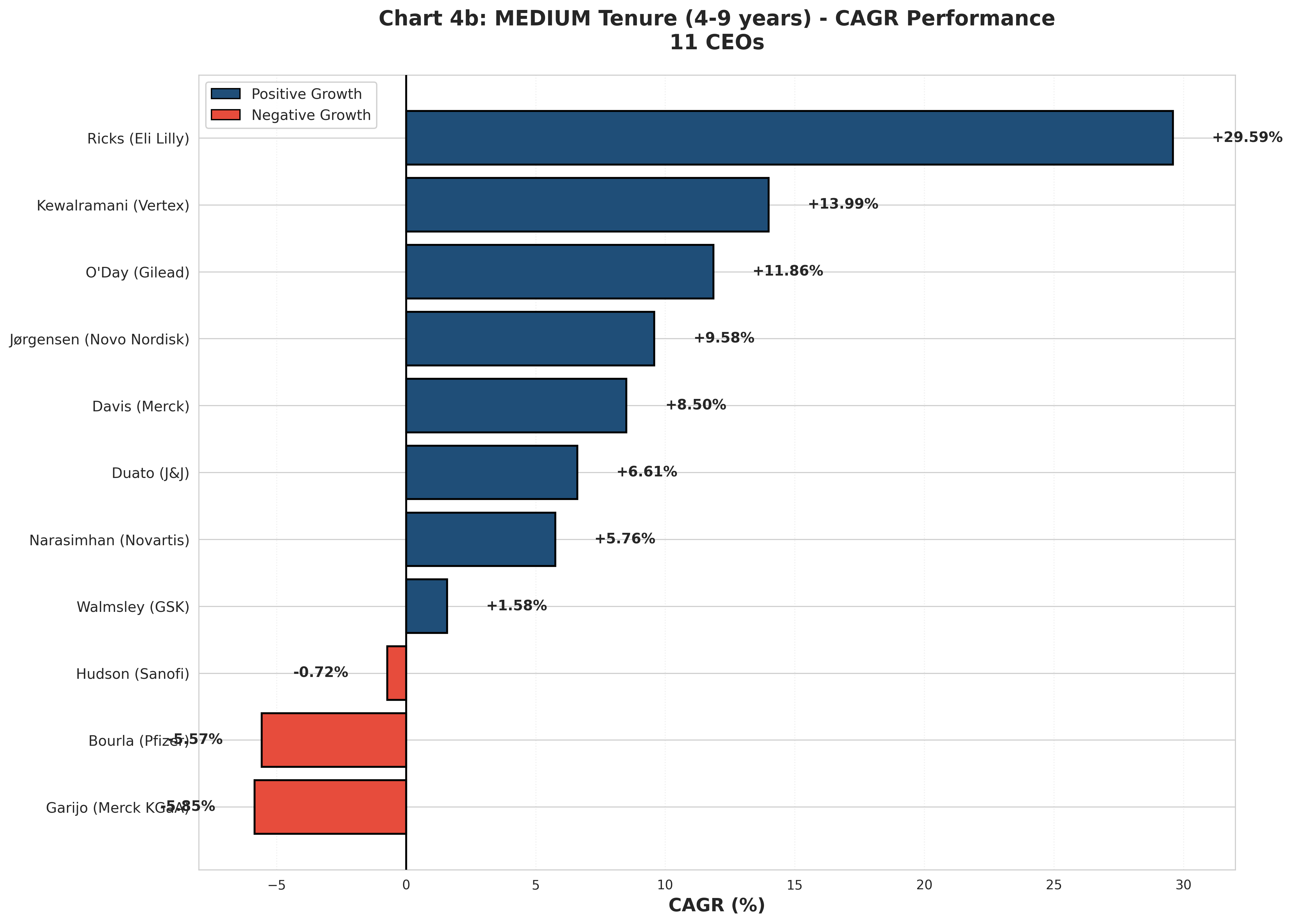
In the current environment, Pfizer’s strategic challenges are less about having a brilliant Chief Strategy Officer and more about portfolio execution. It spent a lot of money on Seagen, but that $40B acquisition needs to start showing some major positive traction, otherwise it will look like it was all for naught. Ongoing Phase 3 studies with its PD-1xVEG-F program will also play huge role, as well as Pfizer making sure they can turn their GLP-1 assets from Metsera into a real threat to Novo and Lilly.
💰 FOLLOW THE MONEY
Deals, dollars, and what they signal
…A quiet week on the deals front. Hopefully more activity next week!
That’s a wrap on this week’s Last Week Tonight in BioPharma. If something here made you think, argue, or spit out your coffee — forward it to a colleague. See you next week!